Sharm El-Sheikh: The Complete Guide (History, Laws, Safety & Facts Nobody Else Covers)
Sharm El-Sheikh: The Complete Guide (History, Laws, Safety & Facts Nobody Else Covers)
Quick answer for anyone skimming: Sharm el-Sheikh is a resort city on the southern tip of Egypt’s Sinai Peninsula, on the Red Sea. It’s technically in Asia, not Africa (mainland Egypt is in Africa; the Sinai Peninsula is the only part of Egypt in Asia). It’s safe to visit as of 2026 — the UK FCDO and US State Department both exclude it from their restricted zones — and it’s one of the fastest-growing tourism economies in the Middle East, having welcomed over 9 million visitors through its airport in a single year. Below is everything else people actually ask before booking.
Is Sharm El-Sheikh in Africa or Asia?
This trips a surprising number of people up. Egypt as a country straddles two continents: the mainland (Cairo, Luxor, Giza, Alexandria) sits in Africa, but the Sinai Peninsula — including Sharm el-Sheikh — is geographically part of Asia. The Suez Canal is the dividing line. So when you fly into Sharm, you’re technically stepping onto the Asian continent, even though you’re still fully within Egypt.
A Brief History of Sharm El-Sheikh
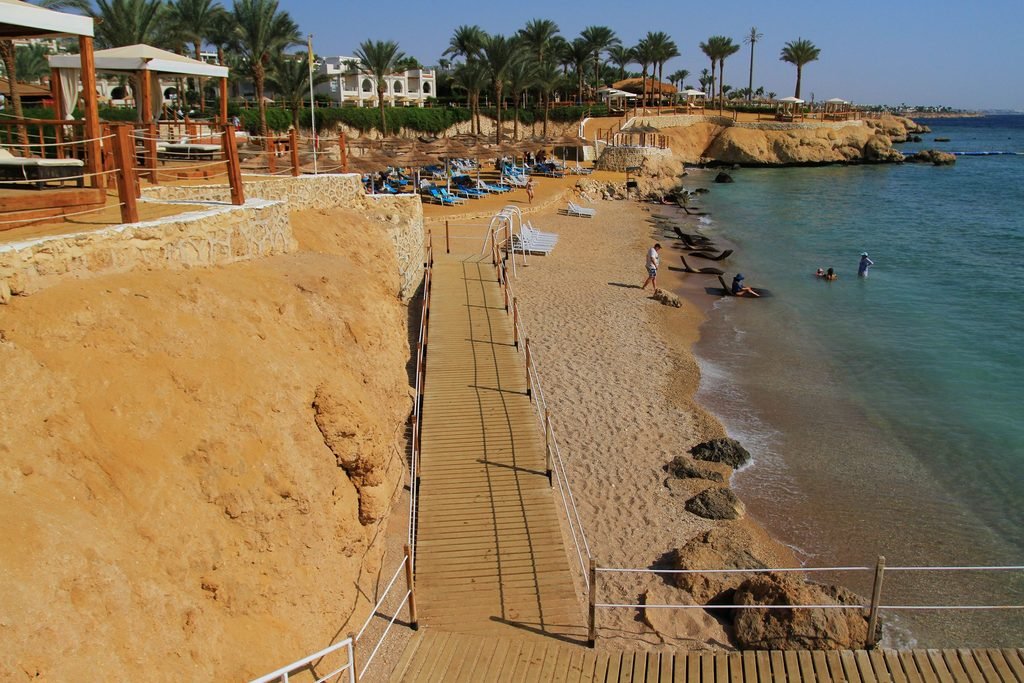
Sharm el-Sheikh has almost none of the ancient history people associate with Egypt. There are no pyramids or pharaonic temples here — for most of history it was a small, remote fishing settlement used by Bedouin communities, valued mainly for its natural harbour at the entrance to the Gulf of Aqaba.
Its name translates roughly to “Bay of the Sheikh.” For centuries it stayed almost uninhabited, useful chiefly as a strategic lookout point controlling the narrow Strait of Tiran — the sea route into the Gulf of Aqaba and, by extension, Israel’s only Red Sea port.
The modern city is a genuinely recent invention. Israel occupied the Sinai Peninsula from 1967 to 1982 and began building a settlement here (called Ofira) purely as a tourist outpost, drawn by the coral reefs and clear water. When Egypt regained the Sinai under the 1979 Egypt-Israel Peace Treaty, it inherited the settlement’s infrastructure and made a deliberate decision to develop the area as an international resort rather than tear it down. Growth from there was fast: the city had just three hotels in 1982 and more than 90 by 2000.
Because of its role as neutral, secure ground close to several Middle Eastern capitals, Sharm has hosted a long list of international peace conferences and summits, which is how it earned UNESCO recognition as a “City of Peace” — one of only a handful of cities worldwide given that designation.
The Geology: Why the Landscape Looks the Way It Does
The dramatic desert-mountain-meets-turquoise-sea scenery around Sharm isn’t an accident of geography — it’s the visible result of one of the most active tectonic zones on the planet. The Sinai Peninsula sits at the triple junction between the African and Arabian tectonic plates, right where the Red Sea Rift, the Gulf of Suez Rift, and the Gulf of Aqaba fault system all meet.
The core of southern Sinai — the rock underneath Sharm — is ancient Precambrian granite, some of it over 600 million years old, pushed up and exposed by millions of years of rifting as the Red Sea slowly pulled apart. That’s what gives the region its jagged mountain backdrop and the multicoloured rock faces (streaked red, purple, and cream from mineral-rich volcanic intrusions) that you’ll see on any desert excursion.
The same tectonic activity created the Red Sea itself and the deep drop-offs just offshore — which is a big part of why the diving and snorkelling here is considered world-class. The underwater topography drops away sharply just past the reef line, creating the wall dives and vibrant coral growth the area is known for.
When Is the Best Time to Visit Sharm El-Sheikh?
| Season | Months | What to expect |
|---|---|---|
| Peak comfort | October–April | Warm days, cooler evenings — the sweet spot most people are searching for |
| Extreme heat | May–September | 38–42°C (100–108°F) — manageable if you’re resort-based, tough for excursions |
| Winter/cheapest | December–February | Still warm by European standards, best value, busiest around Christmas and New Year |
If you’re coming for diving specifically, visibility is good year-round, but many divers favour spring and autumn for calmer conditions.
Laws and Etiquette Tourists Actually Need to Know
This is the section most travel blogs gloss over, and it’s the one people get caught out on:
- Alcohol is legal but restricted to licensed venues. Inside your resort, hotel bars, and licensed restaurants, drinking is completely normal. Drinking in public streets, on public beaches outside your resort, or openly walking around with a drink is against the law, even in a tourist town like Sharm. The legal drinking age is 21.
- Dress code is relaxed in resorts, more conservative outside them. Swimwear and shorts are fine on the beach and around the pool. Cover shoulders and knees when visiting the Old Market, mosques, or any area outside the resort zone.
- Public displays of affection are frowned upon. Unmarried couples can share a hotel room without issue, but overt affection in public is culturally discouraged.
- Drug laws are strict and enforced. Possession, even of small amounts, can carry serious penalties including imprisonment.
- Photography restrictions apply to military and government buildings and checkpoints. Don’t photograph security installations or personnel.
- Ramadan changes the rules temporarily. During Ramadan, eating, drinking, or smoking in public during daylight hours is culturally insensitive and, in some areas, discouraged by law, even for non-Muslims.
- Visa/entry note: UK citizens don’t need a visa for a Sinai-only stay of up to 15 days (the Sinai exemption). If your trip includes Cairo, Luxor, or anywhere outside Sinai, you’ll need a full Egyptian e-Visa.
Is Sharm El-Sheikh Safe in 2026?
Short answer: yes, for the areas tourists actually visit. As of 2026, neither the UK Foreign, Commonwealth & Development Office nor the US State Department advises against travel to Sharm el-Sheikh itself. The FCDO’s restricted zones cover the Northern and Middle Sinai and the area beyond the St Catherine–Nuweiba road — the coastal resort strip that includes Sharm, Dahab, and Nuweiba is specifically excluded from that advisory.
In practice, the resort area functions as a secured zone: every road into Sharm passes through a fixed police checkpoint with vehicle screening, and there’s a dedicated tourist police presence around the main hotel strips, Naama Bay, and the Old Market. Most travel insurance policies remain valid and standard package holidays operate normally.
On sharks — since people search this specifically: Sharm el-Sheikh became briefly notorious in December 2010 after a rare cluster of shark attacks (one fatality, several injuries) near Naama Bay, widely attracted media comparisons to the film Jaws. Investigators at the time linked the unusual behaviour to factors like overfishing disrupting the local food chain and the illegal dumping of animal carcasses near shore, which may have drawn sharks closer in. These clusters are genuinely rare — Egypt has recorded only a small number of shark-related incidents across its entire Red Sea coastline over decades, and standard precautions (avoiding swimming at dawn/dusk, not swimming with open wounds, following any beach closure notices) make it a low-probability event, not something worth cancelling a trip over.
The more realistic risks in Sharm, as with most resort towns, are petty theft, overcharging on unlicensed taxis, and stomach upsets from tap water — not violent crime.
The Economy Behind the Resort
Sharm el-Sheikh isn’t a sleepy beach town anymore — it’s a genuine engine of Egypt’s national economy. Egypt welcomed nearly 19 million tourists in 2025, a 20%+ increase on the year before, and Sharm’s airport was one of the top four entry points into the country, alongside Cairo, Hurghada, and Marsa Alam. Tourism revenue for the country topped $14 billion in a recent 9-month period, and Egypt is openly targeting 30 million annual visitors by 2030.
Almost nobody actually lives in Sharm el-Sheikh in the traditional sense — it exists because of tourism, for tourism. The workforce is largely made up of people from elsewhere in Egypt who’ve relocated for hospitality jobs, since the cost of living in the resort zone itself is high relative to the rest of the country. Hotel construction has been near-continuous since the 1990s, and it shows no sign of slowing — new resort openings and infrastructure investment (airport upgrades, road improvements) are a near-annual occurrence.
Fun Facts About Sharm El-Sheikh
- The “toilet reef”: One of the most-dived wrecks near Sharm, at Ras Mohammed National Park, is the Yolanda — a cargo ship that sank in 1980 while carrying, among other things, a shipment of bathroom fixtures. Divers today can still see toilets and bathtubs scattered across the reef.
- It’s a UNESCO-recognised “City of Peace” — one of only five cities worldwide to hold that specific designation, thanks to its long history of hosting Middle East peace summits.
- Ras Mohammed National Park, just outside the city, was declared a protected national park in 1983 and is considered one of the most biodiverse reef systems in the world, sitting exactly where the Gulf of Suez meets the Gulf of Aqaba.
- There’s a 36-kilometre security wall around parts of the resort perimeter, part of the “ring of security” that separates the tourist zone from the wider Sinai.
- It went from roughly 100 Bedouin residents to millions of annual visitors in under 50 years — one of the fastest tourism build-outs anywhere in the world.
Sharm El-Sheikh: Quick FAQ
Is Sharm el-Sheikh in Egypt? Yes — it’s part of Egypt’s South Sinai Governorate, though geographically the Sinai Peninsula sits in Asia, not Africa.
Do I need a visa for Sharm el-Sheikh? UK citizens get a free Sinai-only entry stamp for stays up to 15 days. A full e-Visa is only needed if you’re travelling beyond Sinai (e.g. to Cairo).
Is alcohol allowed in Sharm el-Sheikh? Yes, but only in licensed venues — hotels, bars, and restaurants. Public drinking is illegal.
Is Sharm el-Sheikh safe for solo female travellers? Generally yes within the resort zone, with the usual precautions (dressing modestly outside the resort, avoiding walking alone late at night, being assertive if approached).
What’s the best time of year to go? October to April for the most comfortable temperatures; December–February for the best value.
Planning an actual trip rather than just researching one? The Fit Traveller’s Sharm el-Sheikh itinerary covers exactly where to stay, the best snorkelling day trip in Ras Mohammed, and hour-by-hour plans for all 4 days.